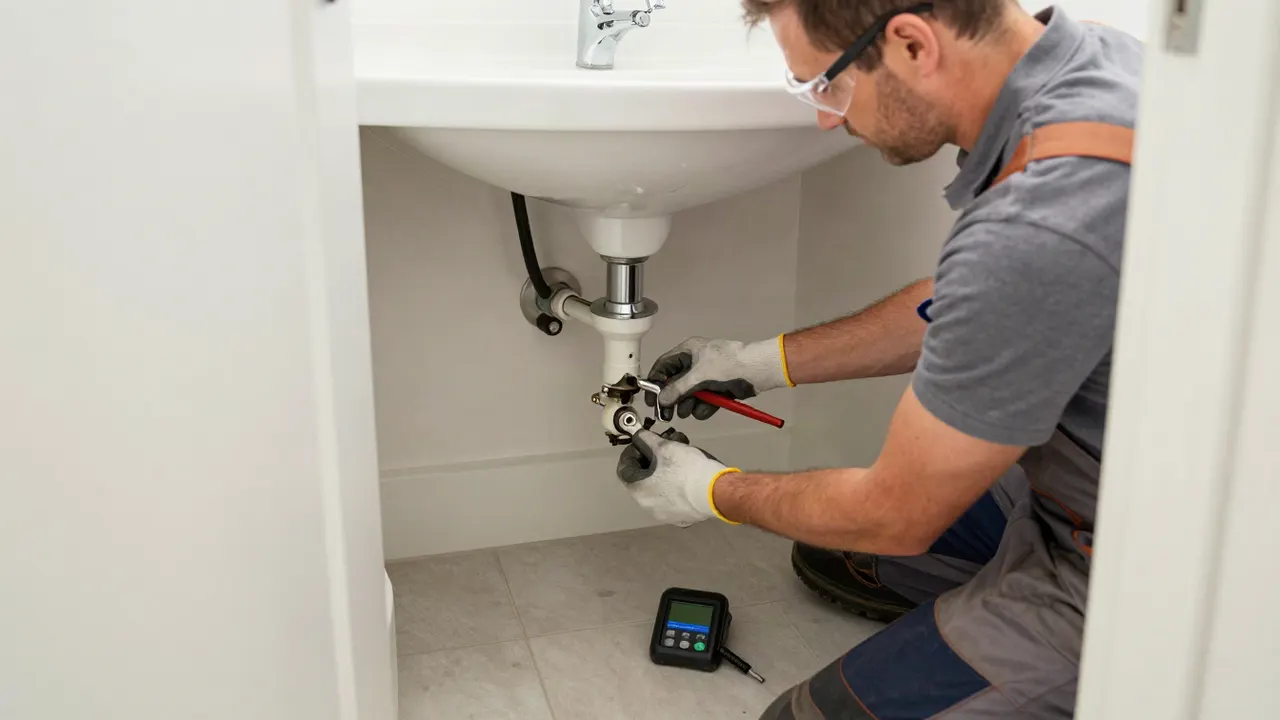
Usually a mat of hair and soap scum at the trap — the most common cause by a wide margin. After that: conditioner and product build-up coating the branch, a roughened cast-iron branch in an older home catching hair faster than it should, or — if other fixtures are involved — a main line problem showing up at the lowest fixture.
Drain Cleaning Nashville Pros
The hair-and-soap mat: what's actually down there
Quick answer
what clears a clogged shower drain? A shower clog is a hair-and-soap mat sitting at or just past the trap. It clears with a hand auger or a short cable in minutes once the mat is reached — single-fixture work at $129 on our price list. The two-dollar prevention is a hair catcher over the drain. If the shower is filling from other fixtures' water, that isn't a shower clog at all — it's the main line, and it's a different page and a different price.
Hair doesn't clog a drain by itself, and neither does soap. Together they're a building material. Strands catch on the crossbars of the drain fitting and on any roughness at the trap, and soap scum — the curd that soap forms in hard-ish water, helped along by conditioners and body washes — cements the strands into a mat that behaves like felt. Add the biofilm that grows on any permanently damp surface and the mat gets slick, dense and surprisingly strong. A clogged shower drain Nashville call is almost always this mat, sitting within arm's reach of the drain opening, which is why the fix is a short tool and not a machine: a hand auger worked through the trap comes back with the whole grey rope of it, and the shower drains like the day it was tiled.
Tubs play the same game on a longer clock — the tub's trap arm runs further, and a mat that forms past the overflow takes a cable through the overflow opening rather than the drain. Either way it's branch work, single-fixture work, $129 — and the mat itself is the diagnosis. When the cable comes back clean from a slow shower, that's information too, and it points somewhere else entirely.
Drain Cleaning Nashville Pros
Why is my shower draining slow?
That's the question this fixture asks, and it has a short list of answers in the order we actually find them. The mat, first and usually. Product build-up second: heavy conditioners, bath oils and sugar scrubs coat the trap and the first stretch of branch, narrowing it the way grease narrows a kitchen line, and in that case clearing the mat isn't the whole job — the coating needs scouring back. Third, in older Nashville bathrooms, the branch itself: cast-iron branch lines roughen inside over decades (the scale the trade calls tuberculation), and a roughened branch catches hair that a smooth PVC branch would pass. The shower still clears the same way, but it will clog again sooner, and we'll tell you that plainly rather than sell you a mystery.
And fourth — the answer that changes the job — the shower isn't the problem at all.
Drain Cleaning Nashville Pros
When a slow shower is the main line introducing itself
The shower or tub is usually the lowest fixture on its floor. Water that can't get down the main line comes up at the lowest opening it can find, and in a house on a crawl space — most of Nashville; only about 17% of Davidson County homes have a basement — that opening is the ground-floor shower. So the tell is not slowness. The tell is company: the shower fills while the washing machine drains, or while a tub upstairs empties, or the toilet gurgles when the shower runs. A mat has never once made a toilet gurgle. If your slow shower arrives with friends, stop pricing shower clogs — the blockage is downstream of the whole bathroom, the fix starts at the cleanout, and our clogged drain hub's branch-or-main test takes two minutes to prove which one you have. Main line cleaning is $249 with the camera run before and after, and the main line cleaning page carries that whole story.
Drain Cleaning Nashville Pros
Biofilm, drain flies, and the smell that isn't sewage
A slow shower sometimes brings small black flies that hop around the drain and a sour smell that bleach never quite fixes. The flies are drain flies, and they don't live in your pipes' water — they live in the biofilm itself, the gelatinous layer coating the trap and branch, feeding and breeding in it. That's why pouring things down the drain disappoints: the bleach runs through the middle of the pipe and the film on the wall, where the flies actually are, shrugs it off. The fix is mechanical — the film has to be scrubbed or augered off the wall, which a proper branch cleaning does as a by-product. Our sewer smell, gurgling and drain flies guide works the whole symptom family in detail, including the dry-trap smell that gets mistaken for all of this. Worth the distinction: a sour bathroom smell from a dry trap or biofilm is a nuisance with a cleaning answer. It is not the occupational sewer-gas hazard the scary pages describe, and nobody should sell it to you as one.
Drain Cleaning Nashville Pros
The hair catcher, and other honest prevention
Every page on this site gets one prevention sermon, and the shower's is two dollars long: a hair catcher over the drain catches in a week what the trap would catch in a year. Beyond that — a mat pulled monthly with a plastic drain stick beats a mat augered yearly, conditioner-heavy households clog faster and can plan on it, and a shower that has needed clearing three times in a year deserves the camera conversation, because at that point the branch is telling you something about itself.
Our shower work is single-fixture work at $129 off the cost page's one list, quoted before we start and flow-tested before we leave — and if the pattern turns out to be the main line, we say so before the price changes, at (615) 555-0134. The clog is small. The honesty about which clog it is shouldn't be.
Often, yes. A plastic drain stick or a zip tool pulls the near mat out of most showers, and a hand auger works the trap. Where DIY honestly ends is when the cable comes back clean and the shower is still slow, or when the shower fills from other fixtures — both of those are past the fixture, and past DIY.
Because the washer's water can't get down the main line, so it comes up at the lowest opening — your shower. That is not a shower clog, whatever it looks like at 7 a.m. Stop running water; it's a main-line call.
Drain flies, living in the biofilm coating the trap and branch — not in the water. They go when the film goes, and the film goes mechanically, by scrubbing or augering the wall clean. Pouring bleach through the middle of the pipe mostly misses the layer they live in.
Keep exploring
Related Services
01→02→03→04→
Clogged Drain
The problem hub: kitchen lines, showers, toilets, floor drains and mains, organized by symptom rather than by tool. Start here if you know what's misbehaving but not why — the page…
Main Line & Sewer Cleaning
When several fixtures slow at once, a toilet gurgles, or water comes up in the lowest shower, the blockage is in the main — and main line work is cabling or jetting chosen by what the…
Sewer Camera Inspection
The proof engine, and the service every other service on this page reports to. A CCTV run from your cleanout to the main, sonde locating that puts each defect on the map with its depth, a…
Drain Cleaning Cost
One dated price list for every drain and sewer job we run — the same numbers on every page of this site, and the same number we quote at your door.