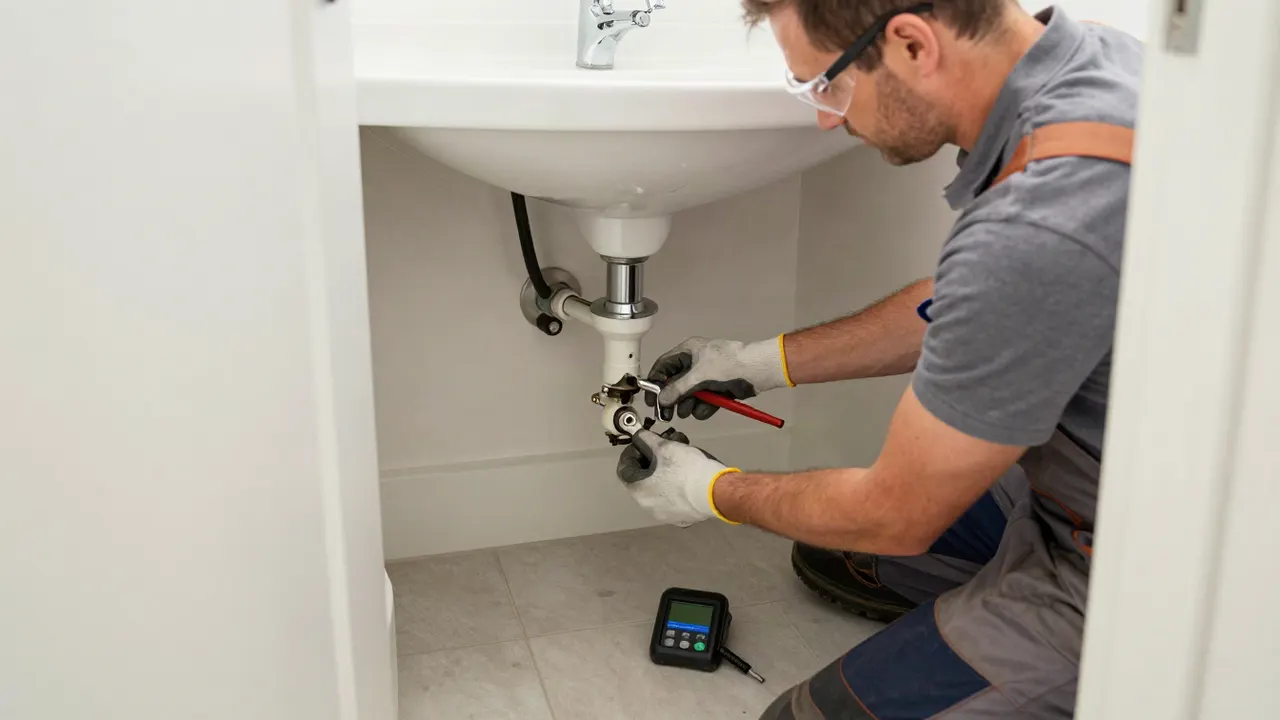
The pattern, not any single symptom: more than one fixture slow at once, a toilet that gurgles when another fixture drains, the lowest shower or floor drain backing up when the washer runs. One slow sink is a branch problem. Several fixtures misbehaving together is the house telling you the shared pipe is in trouble.
Drain Cleaning Nashville Pros
The cabling craft — the head matters more than the machine
Quick answer
is it the main line or just one drain? If more than one fixture is slow, the lowest drain gurgles or backs up, or the shower fills when the washer drains, the problem is the main line, not one drain. A camera through the cleanout shows whether it is roots, scale, a belly or a break — before anyone quotes you a repair.
Ask around and you'll hear the work called a drain snake Nashville job, as if the tool were one thing. It isn't. A cable machine — drum or sectional — is just the motor. The work happens at the cutter head on the end of the cable, and the head has to match the blockage:
- Spiral and spear heads open the first path through a compacted clog so the line starts moving.
- Side cutters scrape the pipe wall as they pass, taking off the layer a spear head leaves behind.
- Root saws — full-diameter blades sized to the pipe — cut root masses back toward the wall instead of drilling a hole through the middle of them.
- On a sectional machine, cable lengths couple together to work long runs from a main drain Nashville TN cleanout out to the street tap.
That matching is the difference between nashville drain snaking that holds for a season or two and the kind that holds for three weeks. A small head in a big root mass makes a hole the diameter of the head. The roots are still there, the hole closes, and you're paying twice for the same clog. When we talk about drain line cleaning Nashville homeowners can verify, this is what we mean: the head sized to the pipe, the run worked joint by joint, and footage afterwards showing the wall, not a tunnel through the middle of the problem.
Drain Cleaning Nashville Pros
Roots in the main: they found a leak before they found your pipe
Here's the part most root conversations get backwards. Tree roots don't break sound pipe, and they don't go hunting for sewer lines out of malice. A joint or a crack leaks a little moisture into the soil — has probably leaked for years — and roots grow toward water the way they grow toward anything that keeps them alive. By the time the mat inside the pipe is catching toilet paper, the tree has simply been drinking from your lateral for a long time. Silver maple and willow are the aggressive water-seekers under Nashville's canopy, and Metro Water Services' own planting guidance treats distance as the prevention: at least ten feet from a line for ordinary trees, twenty to thirty for the thirsty species. Most of the root calls we run are on lines planted long before anybody published that guidance.
Cutting is honest work and we do plenty of it. What we won't do is sell cutting as a cure. The joint the roots came through is still open when we leave, so the regrowth conversation belongs in the same visit: a foaming root treatment after cutting slows regrowth at the joint — it manages the problem, and managing is all any chemical honestly does. Roots are a hole problem, not a dirt problem. The tree roots guide works through the long-term options — repair the joint, line the run, or put the line on a maintenance plan and cut on a schedule with your eyes open.
Drain Cleaning Nashville Pros
What a Tennessee main line actually looks like inside
The most useful description of this work we've ever read wasn't written by a company. It came from a Tennessee homeowner on a plumbing forum, telling the story in the order it happened to him — and the pipe sequence in his yard is the pre-1970 Nashville lateral profile, joint for joint.
His washing machine would drain on the rinse cycle and wastewater came up under the toilet and through the shower. A company ran a root cutter from the back of the house to the street and pulled out a huge chunk of very fine root hairs. Fine for a month. Then it happened again — and this time, at his insistence, they came back with a camera. About ten feet in: a sag holding standing sewage for roughly twenty feet under the house. Then clean cast iron. Then, leaving the house, cast iron joining terra cotta clay laid in three-foot sections — with fine roots entering at the first joint and at every single joint after it, some packed so thick the camera could only pass through the hole the cutter had made the day before. Then a short PVC patch from somebody's earlier repair. Then clay again, all the way to the main.
Read that sequence the way we have to, because each stretch means something different for the fix:
- The sag is a shape problem. Water and solids sit in it permanently, and no cleaning lifts it. Cleaning buys time; it doesn't change the geometry.
- The cast iron stretch was sound. Cast iron under a house, protected from weather, often outlasts the clay outside it.
- Roots at every clay joint is a system at the end of its design, not a single defect. Cutting clears it — the honest maths of how often, and for how many years, is the clean-versus-replace conversation.
- The PVC patch tells you somebody was here before and fixed a section. Sectional history is normal on these lines; a patch isn't a scandal, it's a record.
His sticking point, by the way, was a huge tree ten feet from the house that he didn't want to lose — the line ran about two feet from its base. Will replacing the line kill the tree? Sometimes a reroute or a trenchless method saves both, and sometimes the honest answer is that the tree and the pipe are fighting over the same two feet of ground. What we can promise is that the decision gets made from footage of your actual line — his story is a pattern, not a verdict on your yard.
Drain Cleaning Nashville Pros
The clean that only removed a fifth of the roots
Buried in that same Tennessee thread is the confession the whole industry should have printed on its invoices: after the camera went in, the homeowner worked out that the previous day's root cutting had removed maybe twenty percent of the largest root mass. The cable had punched through. The line drained. The invoice said cleaned. Eighty percent of the problem was still on the wall, which is why "fine for a month" is the most common sentence in this trade.
This is why our main line work ends the way it starts — with the camera. A post-clean pass shows the wall of the pipe, joint by joint, and a cleaned line looks like a cleaned line: bore open, roots cut back, no tunnel through a mat. The footage is yours, and it settles the argument before there is one. If a company cables your main and can't show you the afterwards, what you bought was a hole and a hope. Pipe cleaning Nashville TN residents can check is the only kind worth the name — and on a whole-line job, drain system cleaning Nashville TN wide, we run the same rule from the cleanout to the tap: clean it, then look at it.
A note on what the cable can't do, because one more material lives in these lines: cast iron grows tuberculation — rust scale hanging off the top of the pipe, narrowing the bore. A cable polishes a path through tubercles; it doesn't restore the bore the pipe was born with. Where the camera shows scale rather than a soft clog, the fix is descaling — a chain-flail head stripping the wall back — or, where grease and root hairs coat a sound pipe, hydro jetting. The camera decides which tool. It always decides.
Drain Cleaning Nashville Pros
What main line cleaning costs — from the one list
Main line cabling at Drain Cleaning Nashville Pros is $249, and it includes the camera before and after — the same figure, in the same words, on the cost page, because one price list is the whole point of having one. The market frame around it, from numbers you can check: Angi's Nashville pages put clearing a sewer main at $200–$600, averaging about $380 (updated October 30, 2026), and the one full published list in this market — Prodigy's — prices main line cabling at $89–$350 with a dispatch fee on top. For main drain Nashville work generally, and for drain pipe cleaning Nashville TN quotes that arrive over the phone, hold every number to the same test: is it written, is it dated, and does it survive to the invoice? Ours carries a written 1-year clog warranty — a full year, on paper, with the structural exclusion stated the way we'd want it stated to us: the warranty covers the cleaning on a sound pipe; if the pipe itself is broken, collapsed or bellied, no cleaning warranty on earth covers it, that's a repair conversation, and the footage will show you why.
If the camera verdict is worse than a cleaning — roots at every joint, a belly that holds water, a line that's ovalled or collapsed — the conversation moves to sewer line repair, with options and prices in writing before anything is dug. And if your line is sound but clogs on a calendar, that's a maintenance plan, priced on the cost page like everything else.
Call (615) 555-0134 — and before you book anyone for this work, ask the company for its Tennessee licence number and check it at verify.tn.gov; the real credentials are the Limited Licensed Plumber licence for work under $25,000 and the CMC-A contractor licence at $25,000 and up. If you're not sure whether your problem is a branch line or the main, start on the clogged drain hub — the two-minute test is there — and if it's the main, this is the page, and the camera comes first.
One of the most-repeated answers on the plumbing forums, under a thread about roots growing in at a badly sealed cleanout joint: the roots aren't the disease, the opening is. Cut the roots and leave the joint, and you've scheduled the next visit. That's why our root work ends with a camera pass and an honest conversation about the joint itself — repair it, or manage it knowingly.
It depends what's in the pipe and what shape it's in — which is the camera's department. A sound line cleared of a one-off clog can stay clear for years. A clay line with roots at the joints gets snaked on a cycle — experienced rooters put a sound clay line at every two to four years — and a written guarantee of six months or better is the mark of a company that stands behind the clean. If you're paying several times a year, the arithmetic has flipped and it's time for the replacement conversation.
The whole run, cleanout to tap, with the head sized to the pipe — a drain pipe cleaning Nashville TN job that stops at the clog leaves the next clog already growing downstream of it. Then the camera runs the same distance, and you see what we saw.
Keep exploring
Related Services
01→02→03→04→
Sewer Camera Inspection
The proof engine, and the service every other service on this page reports to. A CCTV run from your cleanout to the main, sonde locating that puts each defect on the map with its depth, a…
Hydro Jetting
High-pressure water scouring for the clogs a cable can't honestly clear: grease that has coated a line down to half its width, scale hanging off old cast iron, root systems at several…
Trenchless Sewer Repair
Cured-in-place lining and pipe bursting for laterals that need replacing without trenching the whole yard — the options that save the driveway, the landscaping, and occasionally the…
Drain Maintenance Plans
For lines that clog on a calendar — root-prone clay, grease-heavy kitchens, cast iron in its failure window — a priced plan beats a series of emergencies. Set schedule, set price, camera…